
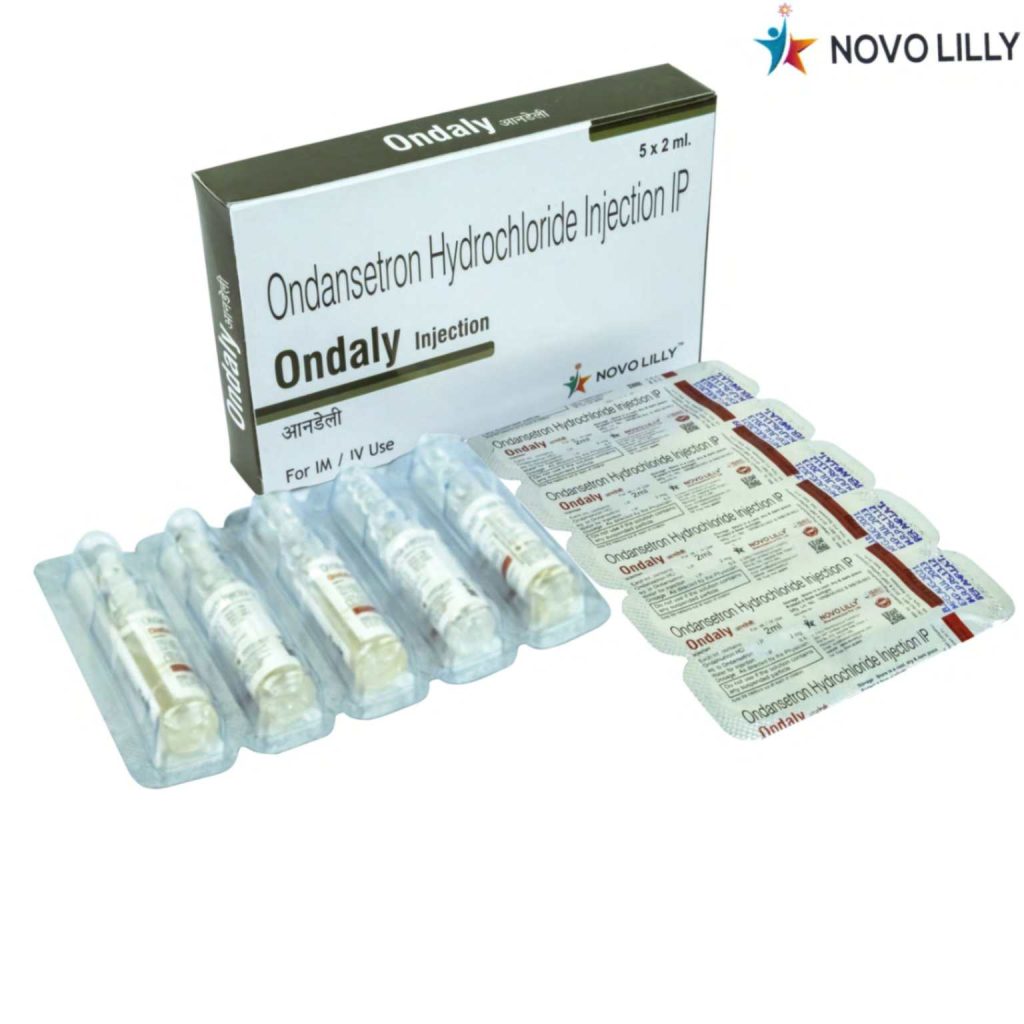
Ondansetron Hydrochloride 2MG Injection is a low-strength sterile injectable formulation containing a defined quantity of ondansetron hydrochloride in a suitable parenteral vehicle. Development of this dosage form requires precise control over solution concentration, pH, clarity, particulate matter, sterility, and container integrity. For pharmaceutical companies expanding their sterile dosage-form portfolio, Ondansetron Hydrochloride 2MG Injection can be incorporated into a structured PCD Pharma Franchise range with appropriate manufacturing controls.
Preparation of a 2MG strength injectable must be accomplished with special care in weighing, dissolution, dilution, and final-volume adjustment. Minor loss during bulk preparation may affect the concentration of an injectable of low strength.
The active pharmaceutical ingredient is checked for identity, purity and solubility, and the compatibility of the active with the predetermined parenteral vehicle. Water of pharmaceutical grade and other ingredients used in the formulation, as appropriate, are added to the final product specification.
Manufacture The manufacturing order is such that the active ingredient will be uniformly mixed into the solution during bulk manufacture. The use of controlled mixing and the appropriate manufacturing conditions will help reduce the extent of concentration variation.
PH is an important formulation parameter for an injectable solution because it can affect chemical stability, solubility, and compatibility of the finished product. For this reason, the formulation is formulated within an established pH range for the product.
In bulk prep pH measurement can be taken post active incorporation and after final volume adjustment. Any adjustments are made under proper conditions to prevent local variations in formulation or added stress.
The solution should be inspected as it is prepared. The final product should confirm to the required specifications for clarity, colour, and visibly free from foreign matter. Appropriate filtration and handling procedures can be included where deemed appropriate in the manufacturing process.
The ready bulk solution then moves via the applicable sterilization processing steps and, wherever relevant, will be filled into a chosen predominant vessel. Sterilizing filtration and aseptic filling can be utilized wherever this has been validated for manufacturing.
Filling accuracy is more important in a low-strength injection. The equipment is set to produce a uniform fill volume for the full batch.
In-process checks: These include fill-volume checks, appearance of containers, placement of closures, visual inspection, and containment of the aseptic process area. Controlled environmental conditions and such techniques as isolator or aseptic hood operation provide the sterile environment necessary for manufacturing.
That may be conducted identification assay related substances pH clarity particulate matter bacterial endotoxins sterility or any other test as required. Given that the formulation contains only a small concentration of active, the analytical method must be sufficiently sensitive and precise to enable it to be quantitated accurately. The procedures used for the preparation and dilution of samples should be well controlled to limit analytical variation.
Finished-product testing is performed with representative sampling and specified, validated or qualified analytical methods. Batch records and/or logs are retained for traceability through receipt of all raw-materials to final release.
The main package material A key packaging element of an injectable product is a container that must be compatible with the formulation and protect the solution. Suitable vial systems or ampoules are tested once the final product has been developed.
Where relevant, options for container-closure integrity, extractables or leachable, solution compatibility and resistance to transportation conditions should be explored in the development of the package.
Assays, related substances, pH, appearance, clarity, particulate matter, sterility related and container related attributes should be recorded during the stability studies. Sensitivity to light and to temperature should also be investigated if relevant to the formulation.
Because the test concentrations of low strength sterile solutions must be prepared in bulk with precision, adjusted to final volume, filled into containers, and tested analytically, production of ondansetron Hydrochloride 2MG Injection must follow tightly controlled standards. Establishing quality in each of these areas contributes to overall finished-product quality, including pH, clarity, sterility, and container integrity.
If a pharma company is introducing a PCD Pharma Franchise for a novel variety, then this injection form can be part of a sterile-product portfolio with specified raw-material profile, validated solution making, sterile operation, analytical validation, and stability testing.
From API qualification and preparation of low-strength solutions through to pH adjustment, sterile filtration or other applicable processing, filling, microbiological testing, container assessment and stability, each step is designed to ensure product consistency. A formula focused sterile manufacturing approach is used to ensure that the outlined quality attributes of Ondansetron Hydrochloride 2MG Injection are retained throughout the proposed shelf life.
Ondansetron Hydrochloride 2MG Injection formulation, sterile solution development, pH control, quality testing, stability and packaging details.