
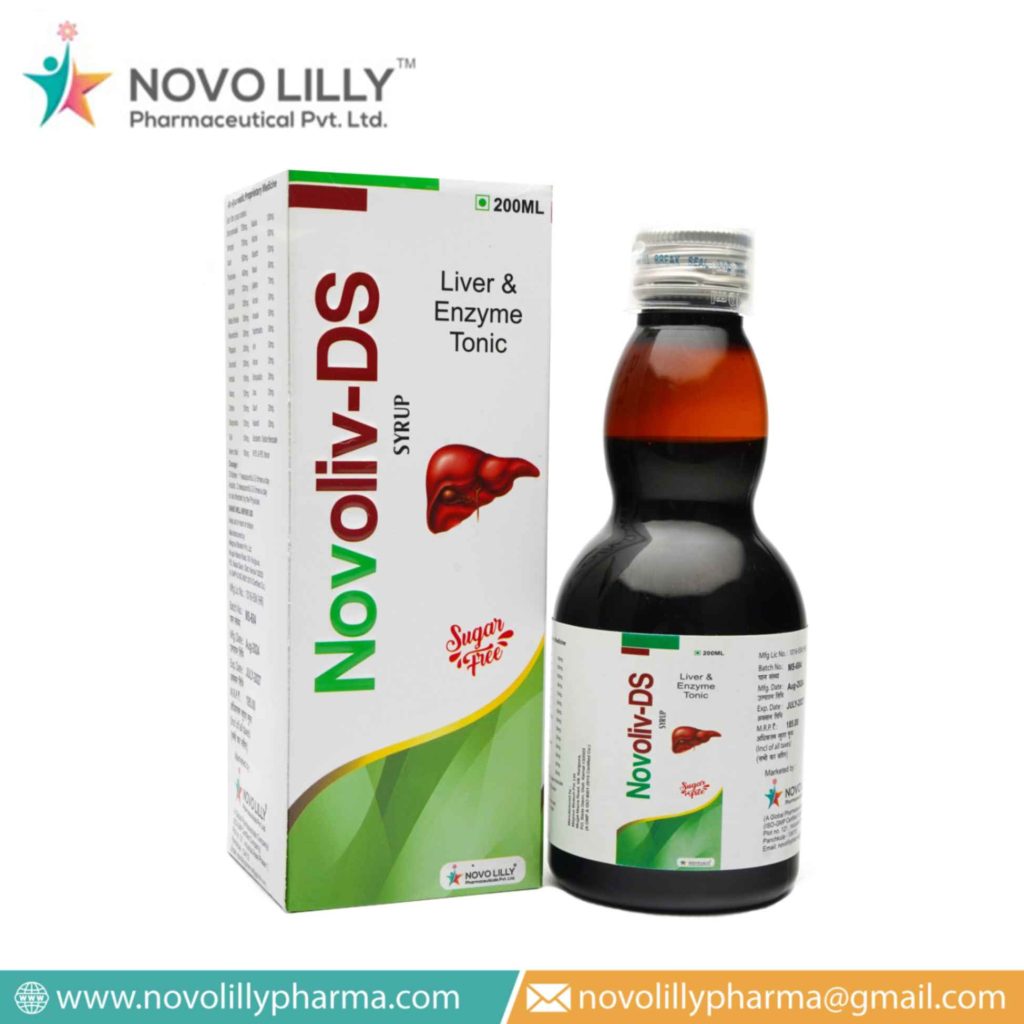
Liver With Enzyme Tonic (Sugar Free) is a liquid pharmaceutical or nutraceutical-style formulation developed without conventional sucrose as the primary sweetening component. Since the exact enzyme composition can vary according to the approved product formula, formulation development should be based on the specified enzyme blend and its individual quality requirements rather than assuming particular ingredients. A sugar-free liquid system requires careful selection of sweeteners, flavouring agents, viscosity modifiers, stabilizers, and other excipients. For companies developing specialized liquid products, this type of formulation can be incorporated into a structured PCD Pharma Franchise portfolio with appropriate quality, stability, and packaging controls.
The foundation of a sugar-free tonic is the development of a suitable aqueous vehicle that provides acceptable physical characteristics without relying on sucrose. Alternative sweetening components can be selected according to the finalized formulation and their compatibility with the enzyme system.
The vehicle needs to maintain suitable viscosity, mouthfeel, appearance, and physical stability throughout the intended shelf life. Depending on the formulation, suitable humectants, sweeteners, viscosity modifiers, flavouring materials, and stabilizing agents may be incorporated.
Because the exact enzyme blend has not been specified, the final vehicle should be selected only after assessing the stability and compatibility requirements of the individual enzymes. This helps prevent assumptions about pH tolerance, temperature sensitivity, or solubility.
The completed liquid should remain homogeneous without undesirable precipitation, separation, or significant changes in viscosity during storage.
Enzymes require more controlled handling than many conventional syrup ingredients because their activity and stability can be influenced by environmental conditions. The specific enzyme blend should therefore be evaluated for pH sensitivity, temperature tolerance, moisture exposure, and compatibility with other formulation components.
During manufacturing, unnecessary exposure to excessive temperatures may be minimized according to the characteristics of the selected enzyme ingredients. The order of addition can also be established to avoid prolonged contact with potentially incompatible components.
Where an enzyme is incorporated as a powder or concentrated preparation, appropriate dispersion techniques may be required to achieve uniform distribution throughout the liquid bulk.
Representative bulk sampling can help verify uniformity before filling. The manufacturing process should be designed around the validated or established stability requirements of the actual enzyme composition rather than a generic tonic process.
Sugar-free formulations often require additional attention to flavour and mouthfeel because replacing sucrose can change the sweetness profile, body, and aftertaste of the finished liquid. The sweetening system is therefore developed alongside the flavour system.
Flavouring agents are selected according to their compatibility with the formulation and their ability to provide a consistent sensory profile. The balance between sweetness, flavour intensity, viscosity, and mouthfeel is evaluated during product development.
Viscosity is another important parameter because it affects pouring behaviour, filling accuracy, and overall product presentation. Appropriate viscosity modifiers may be incorporated where required.
In-process checks can include appearance, colour, odour, pH, viscosity, bulk volume, and homogeneity. These parameters help ensure consistency between manufacturing batches.
Quality control for Liver With Enzyme Tonic (Sugar Free) depends on the final composition and the specifications established for the product. Testing may include identification or assay of specified ingredients, pH, viscosity, appearance, fill volume, and relevant enzyme-related quality parameters.
Where enzyme activity is a defined product attribute, an appropriate analytical procedure may be used to assess activity according to the approved specification. The test approach should be selected according to the particular enzyme or enzyme combination rather than applying a single generic method.
Microbiological quality is particularly important for aqueous liquid formulations. Purified water, equipment sanitation, bulk holding time, environmental conditions, and filling controls contribute to maintaining product quality.
The absence of conventional sugar does not eliminate the need for microbiological controls. The complete formulation and preservative system, where applicable, should be evaluated to establish appropriate protection against microbial growth.
Stability studies help determine how the sugar-free tonic maintains its physical, chemical, microbiological, and enzyme-related quality characteristics during the proposed shelf life.
Depending on the final composition, stability monitoring may include appearance, pH, viscosity, flavour characteristics, active or marker content, enzyme activity where applicable, microbial quality, and precipitation or separation.
Temperature and light conditions may be important considerations when evaluating enzyme-containing formulations. Storage specifications should therefore be established from documented stability results.
The bottle and closure system should provide suitable containment and compatibility with the formulation. Pharmaceutical-grade bottles may be evaluated for leakage resistance, closure integrity, dispensing performance, and protection from environmental exposure.
Accurate labeling should include the product name, composition, batch details, manufacturing information, expiry, storage conditions, and other applicable regulatory particulars.
Liver With Enzyme Tonic (Sugar Free) requires a formulation strategy that balances a sugar-free sweetening system with the stability requirements of the specified enzyme composition. Since the exact enzyme ingredients are not provided, product development should begin with detailed raw-material specifications and compatibility studies before finalizing the manufacturing process.
For companies expanding a PCD Pharma Franchise portfolio, this type of sugar-free liquid can be developed as part of a broader tonic and liquid formulation range. Controlled raw-material sourcing, suitable sweetener and flavour selection, enzyme-sensitive processing, microbiological controls, stability evaluation, and compatible packaging all contribute to consistent product quality.
From preparation of the sugar-free vehicle and controlled enzyme incorporation to bulk testing, filling, stability monitoring, and final packaging, each stage should follow defined specifications. A formulation-specific approach helps maintain the intended physical characteristics and quality profile throughout the product's shelf life.