
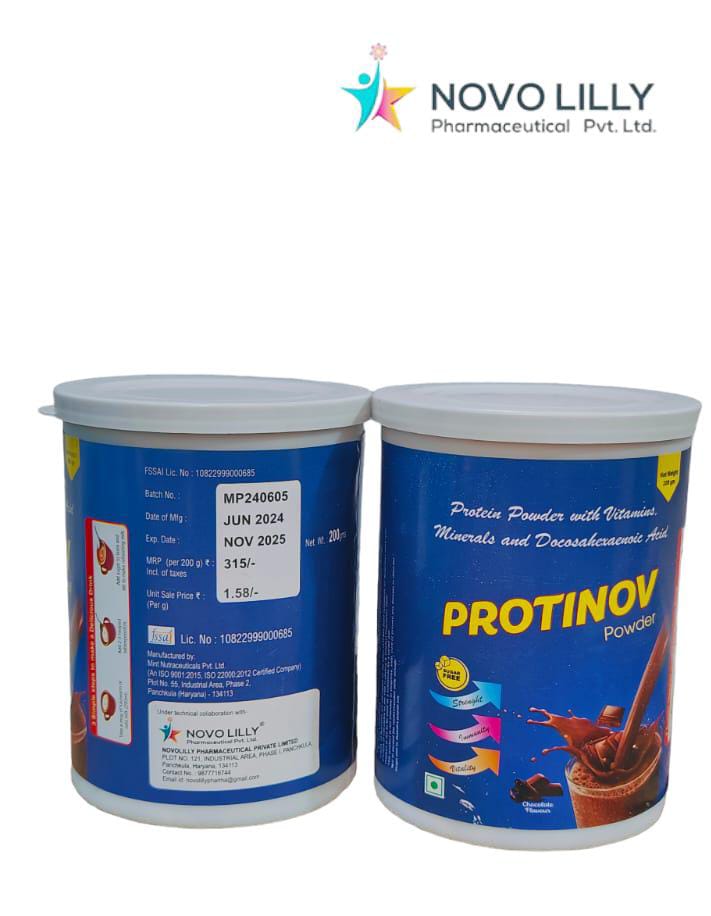
Just think of an energy booster blend of all vitamin, minerals, DHA, cyanocobalamin, and lycopene powder, a combination of these components can be known as a multi-component or number and must be in the form of a powder. Not only a combination of micronutrients, but a combination of an oil base compound and low-dose vitamins also need special attention to ingredients, ingredients uniformity, moisture absorption, and flavor. For PCD Pharma Franchise companies who want to promote our product range of PCD pharma Franchise companies, it should be formulated step by step.
What are the specific challenges of this formulation? An excellent synergy of ingredients with different physical and chemical characteristics. Vitamins and minerals are present at different concentration levels, while the delicate cyanocobalamin is present in a lower concentration. Lycopene is sensitive to its environment, and DHA has to be handled with care to preserve stability.
The key to success is establishing a carrier and excipient matrix that will prevent excessive segregation as a result of blending, transfer and filling. Particle size, bulk density, flowability, moisture content and other considerations are all central to the characteristics of the blend.
During formulation all the ingredients are tested for compatibility so the nutritional elements are uniformly dispersed till the end of the product's shelf life.
Completing a batch of powder and maintaining content uniformity can be a challenge. How do you keep ingredients in far different proportions, reaching a consistent composition? Controlled Premixing is one tool.
At doses of low-dose ingredients, such as cyanocobalamin, a compatible carrier may be used to make a homogenous premix prior to incorporation into larger batch. Lycopene and DHA may require dispersion depending on physical form.
The order of ingredient addition, blending time, mixer load, and mixing intensity are optimized during formulation development. Improper mixing may change the attributes of powders and excessive mixing may lead to poor powder segregation. Samples collected from different points within the blender form a critical part of the in-process testing strategy.
The issue of moisture control becomes even more crucial within these multi-nutrient formulas. Too much moisture interferes with powder flow, increases the risk of clumping and can destabilize volatile vitamins and other ingredients. This is why raw materials are tested for moisture prior to production.
The final powder has its flowability, bulk density, particle size distribution and tendency to cake tested. Optimizing the particle-size distribution can improve powder blending and flow.
Adding powder of DHA or lycopene using a carrier or encapsulated format influences the physical properties of the product. Attention to powder handling and manufacturing is crucial to be able to keep the powder matrix consistent.
The sensory profile of this blend is highly distinctive, with a blend of vitamins and minerals, DHA, and botanical ingredients. In the design phase, flavor systems, sweeteners, and other excipients are selected to achieve pleasant taste without affecting physical stability.
Manufacture of premixes and mixing of premixes and bulk powders Premixes are dispensed and verified against an approved formulation. Premixes are made up and mixed with the main powder base. Controlled blending, sampling and quality testing before the bulk material is moved on to filling.
Where the formulation is intended for reconstitution, the dispersibility of the material in a selected liquid medium is examined. The properties of wetting, dispersibility, sedimentation, and reconstitution uniformity are observed to give an idea of the performance of the final article.
The quality control process for this nutraceutical formulation consists of testing individual ingredients and finished powder. Testing can include identification and assay of specific vitamins, minerals, cyanocobalamin, lycopene, and more to specifications approved by the company.
Physical characteristics tested include appearance, moisture content, bulk density, flow properties, particle-size distribution, and blend uniformity. The presence of microbiological contamination is checked to determine its contribution to the nutritional powder.
Monitoring all four profiles over time, including assay, color, odor, moisture, flow, and other quality parameters. Potential light and oxygen exposure should be taken into account during formulation development. Lycopene and some vitamins require protection from light and oxygen.
Packaging keeps the powder fresh and multi-nutrient powder. The container or sachets chosen should be able to give protection against moisture, light (if necessary), and oxygen. The cap/seal should also be able to provide protection throughout the process of storage, freight, and distribution.
Prior to packaging, producers verify: the container's suitability; the closure; fill-weight uniformity and stability at predetermined conditions. Proper marking and definitive packaging procedures allow the product to be traced through the entire process.
This powder may serve as a foundation for a well-organized range of PCD Pharma Franchise companies when used in combination. Regulated moisture protection, impeccable analytical testing, uniform raw material quality, expert packaging design, and appropriate blending all contribute to a package that can be widely sold in the pharmaceutical industry.
Vitamins, Minerals, DHA, Cyanocobalamin & Lycopene Powder with details on formulation, quality, manufacturing and PCD Pharma Franchise opportunities.