
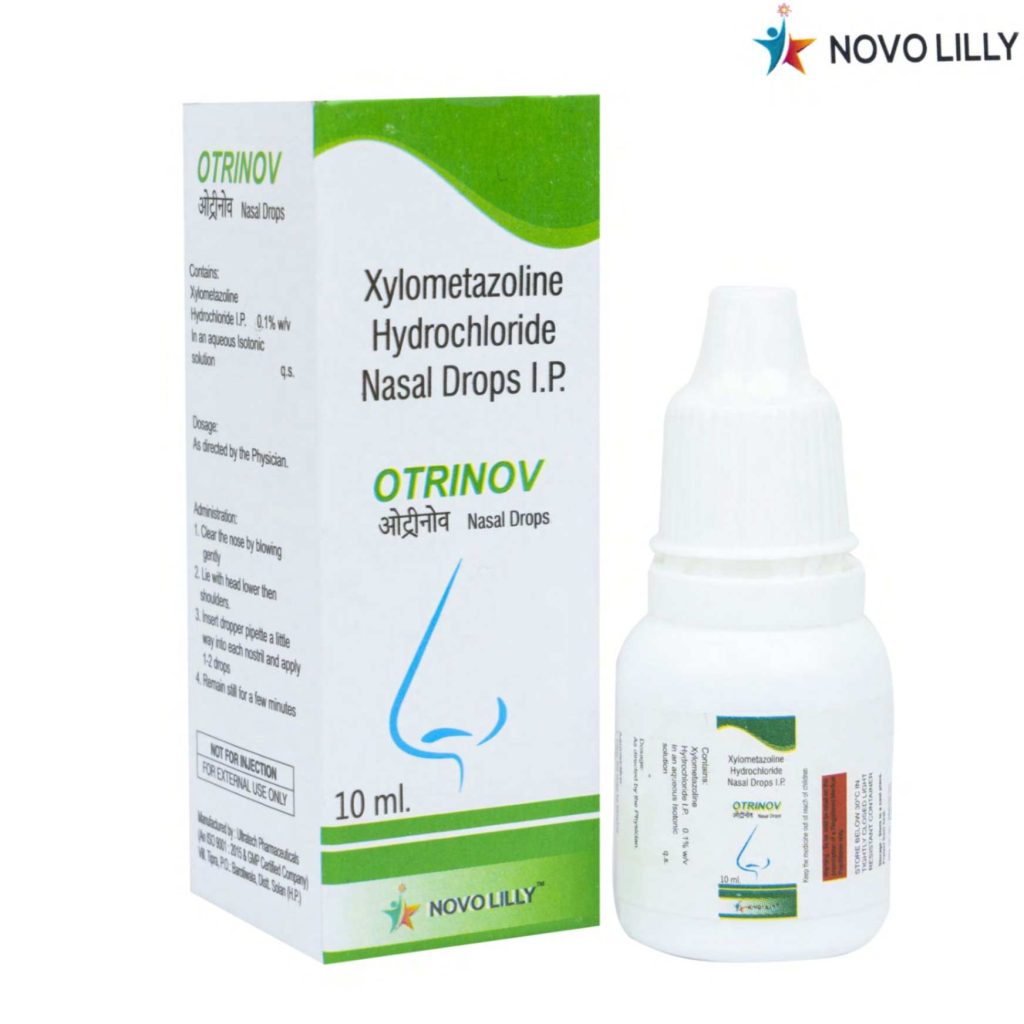
Xylometazoline Hydrochloride 1% W/V Nasal Drop (Adult) is a liquid nasal dosage formulation containing xylometazoline hydrochloride at a defined 1% w/v concentration. Nasal drops require controlled solution preparation, appropriate pH and tonicity, consistent drop delivery, and suitable container-closure performance. For pharmaceutical companies developing a dedicated nasal-care portfolio, this formulation can be incorporated into a structured PCD Pharma Franchise range with appropriate quality-control and manufacturing systems.
The formulation begins with development of a clear and uniform aqueous system capable of maintaining the specified concentration of xylometazoline hydrochloride. Pharmaceutical-grade water and suitable formulation excipients are selected according to the approved composition.
pH is an important development parameter for a nasal liquid because it can influence chemical stability, formulation compatibility, and the physical characteristics of the finished solution. A suitable buffering system may be incorporated where required to maintain the established pH range.
During development, the formulation can be evaluated for pH, clarity, colour, odour, and concentration uniformity. The final composition should remain consistent throughout the bulk preparation and filling process.
The physical properties of a nasal solution need to be considered alongside the active concentration. Where required by the formulation design, suitable tonicity-adjusting agents may be incorporated to establish the intended osmotic characteristics.
The concentration and viscosity of the liquid can influence drop formation and dispensing behavior. Therefore, formulation development should consider the interaction between the liquid properties and the selected dispensing container.
Parameters such as viscosity, specific gravity, surface characteristics, and drop volume can be assessed during product development. The objective is to establish a liquid system that provides consistent dispensing from the selected nasal-drop container.
The dispensing system is an integral part of nasal-drop product development. Nozzle dimensions, bottle design, liquid viscosity, surface tension, and orientation during dispensing can influence the size and consistency of individual drops.
The selected dropper assembly can therefore be evaluated for delivered-volume consistency under defined test conditions. Filling equipment should also be calibrated to maintain the required fill volume across the manufacturing batch.
In-process checks may include fill volume, bottle appearance, closure placement, leakage, and dropper performance. Proper container assembly helps maintain product integrity during storage and routine handling.
A nasal drop formulation should meet established requirements for clarity and absence of visible foreign particles. Controlled raw materials, appropriate filtration where applicable, and hygienic manufacturing practices support the desired solution quality.
Microbiological control is particularly important for aqueous nasal formulations. Pharmaceutical-grade water, equipment sanitation, environmental controls, bulk holding time, and controlled filling practices contribute to maintaining microbiological quality.
Finished-product testing may include assay, identification, pH, clarity, microbial quality, fill volume, and other applicable parameters. Where preservatives are included in the formulation, their suitability should be established for the complete product system.
Stability studies help establish whether Xylometazoline Hydrochloride 1% W/V Nasal Drop (Adult) maintains its chemical, physical, and microbiological characteristics throughout the proposed shelf life. Monitoring may include assay, related substances, pH, appearance, clarity, microbial quality, and dispensing performance.
The bottle, dropper, cap, and closure system should be evaluated for compatibility with the formulation. Container materials should not adversely affect the solution or introduce unacceptable changes during storage.
Light, temperature, and other environmental conditions may be considered according to the stability characteristics of the formulation. Packaging studies can also evaluate leakage resistance and closure integrity during transportation.
Xylometazoline Hydrochloride 1% W/V Nasal Drop (Adult) requires product development that integrates solution chemistry with the performance of the dispensing device. Maintaining concentration uniformity, suitable pH, appropriate physical characteristics, microbiological quality, and consistent drop delivery is central to finished-product control.
For pharmaceutical companies expanding their PCD Pharma Franchise portfolio, this nasal-drop formulation can be included within a specialized nasal-care range supported by defined raw-material specifications, controlled liquid processing, analytical testing, stability studies, and compatible packaging.
From solution preparation and pH adjustment to filtration where applicable, dropper calibration, filling, microbiological evaluation, container testing, and stability monitoring, every stage contributes to product consistency. A formulation-specific approach helps maintain the defined quality characteristics of Xylometazoline Hydrochloride 1% W/V Nasal Drop (Adult) throughout its proposed shelf life.
Xylometazoline Hydrochloride 1% W/V Nasal Drops formulation, pH, dropper performance, quality control, stability and packaging details.